
On the r/DubaiPetrolHeads forum, one owner summed up what many people learn the hard way: mechanics use technical jargon to convince you that expensive repairs are needed when they aren't. Another posted a bill that read simply 'labor 1000dhs', no breakdown of what was actually done. A third described a car that went in for one fault and came back with parts removed, charges added, and the original problem untouched.
These aren't isolated stories. They're the pattern. And the pattern is easier to spot than you think, if you know what to look for. As an independent workshop in Al Quoz that regularly fixes the aftermath of bad garage visits, here are the five red flags we see most often, straight from real owners.
1. Jargon instead of evidence
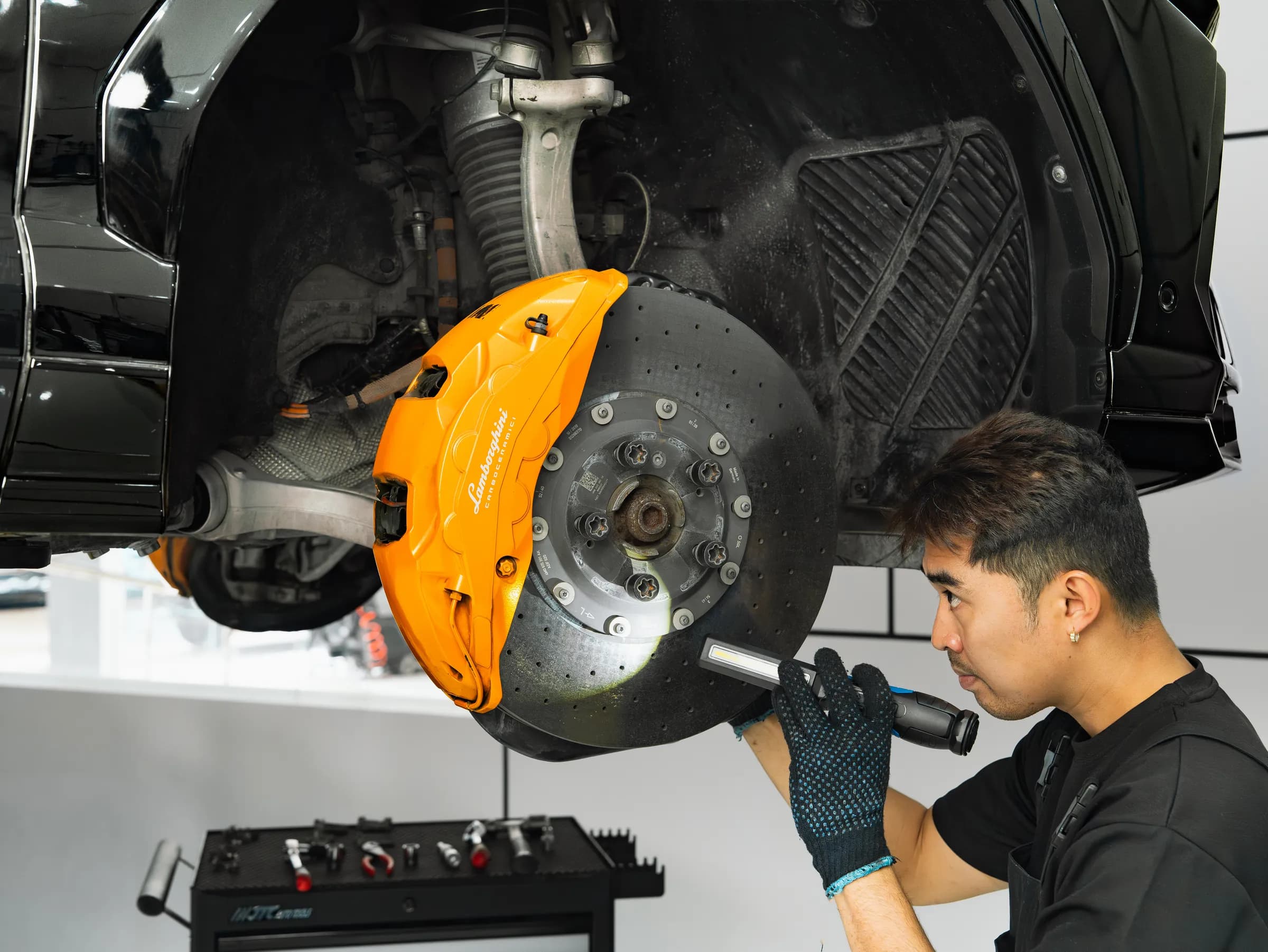
'Your clutch is slipping, we need a new accumulator, new pump and new clutch', without showing you a single worn part or reading. When a workshop can't point to physical evidence, it's either guessing or padding the bill. A genuine technician shows you the problem: a measured brake disc, a photographed bushing, a diagnostic code on the screen. If you only hear words and fear, walk away.An honest diagnostic always comes with proof you can see.
2. The bill has no itemisation
A one-line invoice telling you what you owe, with no breakdown of parts and labour, is a red flag by itself. It's also a red flag if the workshop can't produce a written quote before starting work. You cannot verify a bill you can't read. Always ask for an itemised quote in writing before any work begins, parts with numbers, labour in hours, and a total.
3. Pressure selling and 'safety' fear
You came for an oil change and suddenly your brakes are 'dangerous,' your battery is 'on its way out,' and your suspension is 'going to fail.' Panic selling works, which is why it's used. The fix: get it in writing, then get a second opinion. In one recent Dubai case, an owner was pressured into replacing parts through fear-based selling, and the original issue was never fixed. An independent inspection is cheap insurance against this.A pre-purchase or full inspection gives you a second set of qualified eyes and a written report you can compare against the quote.
4. No reports, no photos, no communication
A good workshop updates you with photos and findings. A bad one goes silent and hands you a finished car and a bill. One owner on the forums had his Alfa Romeo parked for six weeks with no communication and no record of what had been done, a classic sign of a workshop without process. If they can't show you what they did and why, assume it's because they can't.Our oil and fluid service comes with a transparent digital report precisely so you never have to wonder what happened to your car.
5. The car comes back with a new problem
A workshop that damages your car during the repair and says nothing, a dent, a missing cap, a new warning light, is a workshop to never revisit. One Dubai owner posted about a garage that damaged his vehicle across multiple visits while fitting parts they'd recommended. If a garage takes responsibility, documents the damage and fixes it, that's acceptable. If they gaslight you, leave a review and find another shop.
The Bottom Line
A bad workshop doesn't announce itself. It reveals itself through small things: vague quotes, pressure, no evidence, no communication, no accountability. Every single red flag above is fixable from your side with two habits: always ask for itemised written quotes and always ask for evidence. The workshops that refuse are the ones to avoid. The ones that welcome it are the ones worth keeping. At Luxury Auto Care Dubai, every job, from adiagnostic scan to a full mechanical and electrical repair, is documented, itemised and explained before we start. That's the standard every owner deserves, and the one we hold ourselves to.