One recent post in a Dubai owners' forum tells a story every used-car buyer should read before handing over a dirham. The buyer did what they were told to do, paid for a pre-purchase inspection before buying, specifically to check for accident history, and the report came back clean. A year on, the same car failed its annual passing test in Abu Dhabi for major chassis repair. The paperwork said one thing. The car underneath said another. And the inspection they trusted had missed it.
That story is not unusual, and the reason is simple: not every 'pre-purchase inspection' in Dubai is the same thing. Some are a fifteen-minute walk-around with a torch. Others are a documented two-hour assessment on a lift, with a diagnostic scan and a paint thickness gauge. Both get sold under the same name at wildly different prices, and the gap between them is exactly where expensive surprises live. This is what a PPI actually does, what it can miss, and how to make sure the one you pay for actually protects you.
What a Pre-Purchase Inspection Is Actually For
A pre-purchase inspection is a snapshot of a car's condition at a single point in time. Its job is to find what a seller either doesn't know or won't tell you: previous accident damage, mechanical wear, electronic faults, an odometer that doesn't match the car's real life, and the near-term repair bills waiting for you. A proper inspection ends with a written report listing what was found, how serious it is, and what each fault would cost to put right, so you can negotiate with real numbers or walk away.
It is not a warranty. It cannot promise a turbocharger won't fail next month or that a control arm won't wear out next year. What a good inspection does is remove the hidden problems, the ones that already exist on the day you buy. Catch those and the rest is ordinary ownership. Miss them and the first repair bill becomes your welcome to the car.
Why the Cheapest PPI Misses the Most
'Pre-purchase inspection' is not a regulated term, and that is the whole problem. A dealer's own 'inspection' is a sales tool, not an independent check. A cut-price check is usually a visual walk-around with no lift, no paint gauge and no diagnostic scan. Neither will find a welded chassis leg or a cleared fault code, because neither looks for them.
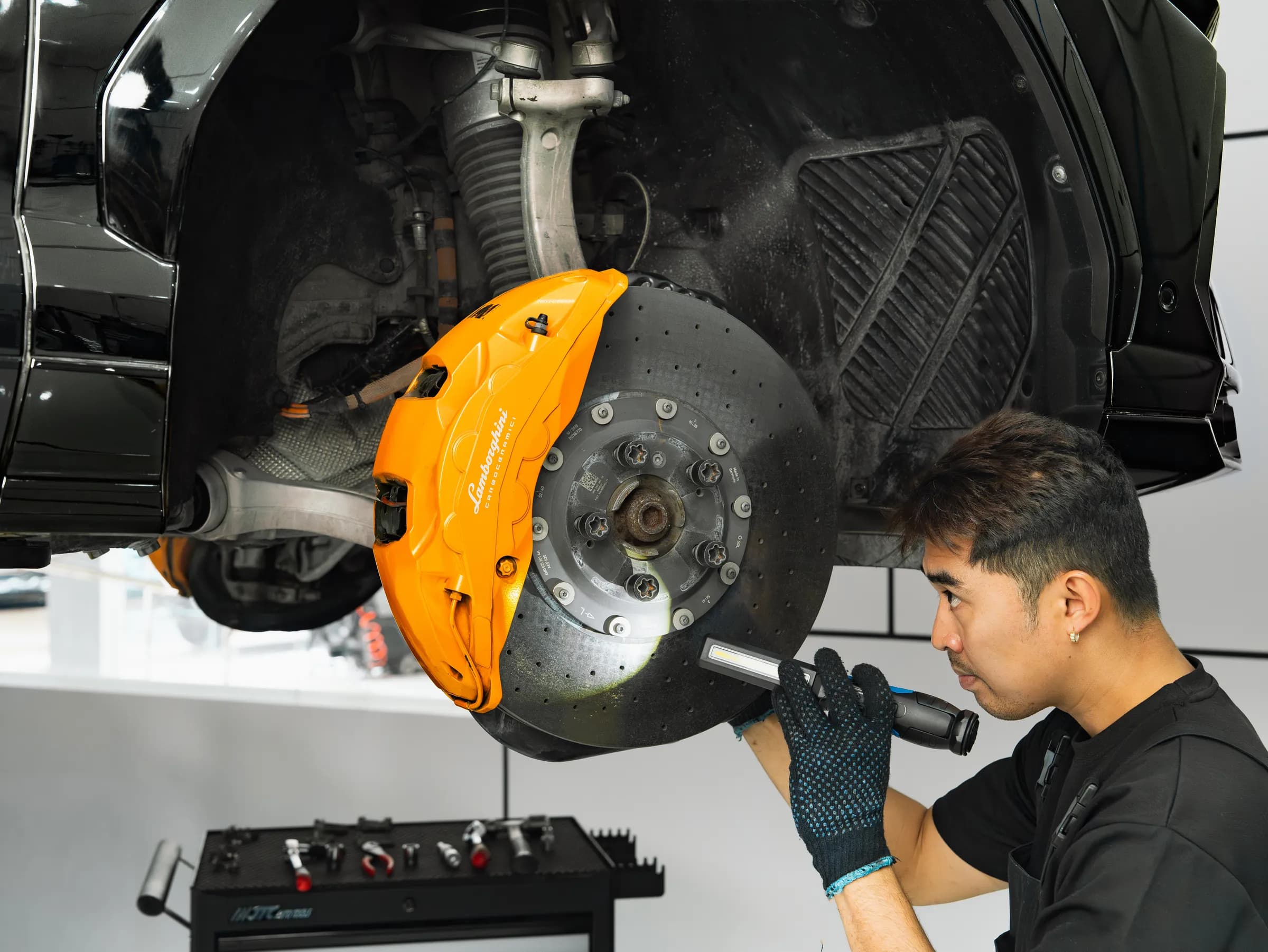
A genuine independent inspection takes time, uses equipment and puts the car on a lift. When a price is a fraction of everyone else's, ask what is not being done. Is the car being raised? Is paint thickness being measured on every panel? Is a full diagnostic scan being run, or just the engine checked? A cheap inspection that skips those steps is not a bargain. It is the reason people end up writing the posts above. Our 150-point inspection covers each of those steps and ends with a photographic report you can negotiate with.
'No Accidents' Doesn't Mean No Accidents
This is the most misunderstood phrase in used-car buying. When a seller says a car is 'accident-free', they usually mean no insurance claim was ever filed, or the local accident record is clean. That is not the same as never damaged. A car can be repaired privately, outside insurance, after a crash, and no official record will ever show it. A GCC car that left the country and returned, or an import repaired before it ever reached the UAE, has no local history to check at all.
The words 'no accidents' describe the paperwork, not the metal. Only a hands-on inspection can confirm what the record cannot, which is why we treat accident history as its own discipline rather than a box ticked on a generic checklist.
The Hidden Chassis Repair
The Abu Dhabi story above, a car that passed a so-called inspection and later failed the passing test, almost always comes down to structure. Chassis and frame damage can be very well hidden: fresh underseal sprayed over repaired metal, a chassis leg straightened and repainted, panel gaps made to look even with filler. From the outside, in good light, the car looks clean.
A digital paint thickness gauge is the tell. Factory paint sits in a consistent range, panel to panel; repaired and repainted panels read higher, sometimes dramatically. Measuring every panel, checking panel gaps for asymmetry, and inspecting the underside and engine bay for welding or fresh sealer is how structural repair gets caught. It is specialist work, and it is exactly what a quick visual 'inspection' skips. If a report does find it, a proper accident repair is a different, more honest conversation about what the car is really worth.
Cleared Fault Codes and a Washed Engine Bay
Two of the oldest tricks in the trade work because they leave the car looking cleaner, not worse. The first is clearing the fault codes. A seller with a diagnostic tool can wipe the stored errors just before you arrive, and a basic scanner will then report 'no faults'. The car's own readiness monitors, the self-tests it runs after a reset, tell a different story, because they read as 'not ready'. A proper diagnostic scan checks exactly that and reads mileage and service data from multiple control modules, not just the engine.
The second is the steam-cleaned engine bay. A spotless engine can hide an oil leak, a weeping gasket or a dried coolant stain until the first long, hot drive. On a Dubai car, that first drive could be the one that finds the leak for you, somewhere inconvenient and expensive.
The Odometer and the Electronic Memory
A rolled-back odometer is one of the most common complaints in this market, and the dashboard number is the easiest part of a car to fake. The control modules are harder to fool. A scan reads mileage from several units, engine, gearbox, airbag and service counters, and flags inconsistencies between them. If the numbers disagree, the car has a story it isn't telling.
Cross-checking the mileage against registration renewals, insurance records and service history is just as important. When a service record shows 200,000 km two years before the dial shows 120,000, you have your answer. A diligent inspection treats the odometer as one data point, not the truth. Our diagnostic scanning service reads the electronic memory behind the number on the dash.
Imports: The Spec and History Local Records Never Show
American-spec, Japanese-spec and other non-GCC imports are everywhere in Dubai, often at tempting prices, and they carry two extra risks a local car doesn't. The first is history. Many originate from overseas insurance auctions, where a written-off car can be bought cheaply and shipped here, and no UAE record captures that past. 'Crash-repaired import' is a phrase that should slow you down.
The second is specification. Headlights, emissions equipment and safety systems built for another market may not meet UAE requirements, which can turn registration into an expensive problem after you have already paid for the car. An imported vehicle inspection verifies VIN integrity, checks for signs of cloning or tampering, and confirms the car actually meets what the RTA expects, before you commit.
Why the Inspector's Tools Matter More Than the Checklist
Modern luxury cars hide their most expensive problems behind electronics. Air suspension, adaptive dampers, driver-assistance systems, and on hybrids and EVs the high-voltage battery and its cooling, all need manufacturer-level diagnostic tools and brand-specific knowledge to assess properly. A generic scanner cannot read a flagship's air suspension faults or verify a performance model's transmission adaptations.
This is why a supercar or a flagship luxury car should be inspected by someone who works on that marque, not a general garage. The difference between inspecting a family hatchback and inspecting a Ferrari isn't cosmetic; it decides whether the report is worth reading at all. Our luxury car inspection and supercar inspection are built around exactly those marque-specific systems.
What a Diligent PPI Should Include
If you are paying for a pre-purchase inspection in Dubai, here is what a thorough one contains. Anything missing from this list is a gap you are exposed to:
- A full diagnostic scan reading every control module, checking readiness monitors and cross-checking mileage, not just the engine.
- Digital paint thickness measurement on every panel, compared against the factory range to expose repaint and repair.
- A structural check on a lift: chassis legs, floor, boot floor and engine bay inspected for welding, fresh sealer or replaced panels.
- A road test with the inspector at the wheel, listening for gearbox, differential, suspension and braking faults.
- Document and history verification, including mileage on renewals and insurance, plus VIN checks on any import.
- A written, photographic report that names every fault found and estimates its repair cost, so the number is actually useful to you.
Get the Inspection Before the Money Moves
The one rule that would have saved every buyer in those forum threads is this: inspect before you pay, never after. Arrange the inspection yourself, at a workshop you chose, not one the seller recommended. A serious seller will welcome it; the only person who objects to an independent inspection is someone with something to hide.
If you are mid-purchase and need an answer this week, we run pre-purchase inspections in Al Quoz and can assess a car for you before you commit. Book a pre-purchase inspection and if the report does turn up accident repair you're already living with, our accident repair team and suspension specialists can quote the fix honestly. You can also reach us here to talk through a car before you buy.
The Bottom Line
A pre-purchase inspection is only as good as what it actually checks. The cheap one that skips the lift, the paint gauge and the diagnostic scan is the one most likely to miss the hidden chassis repair that fails a passing test a year later. 'No accidents' describes paperwork, not metal. If you are spending serious money on a used luxury car in Dubai, pay for a real inspection, choose the inspector yourself, and get it done before you hand over a dirham.